

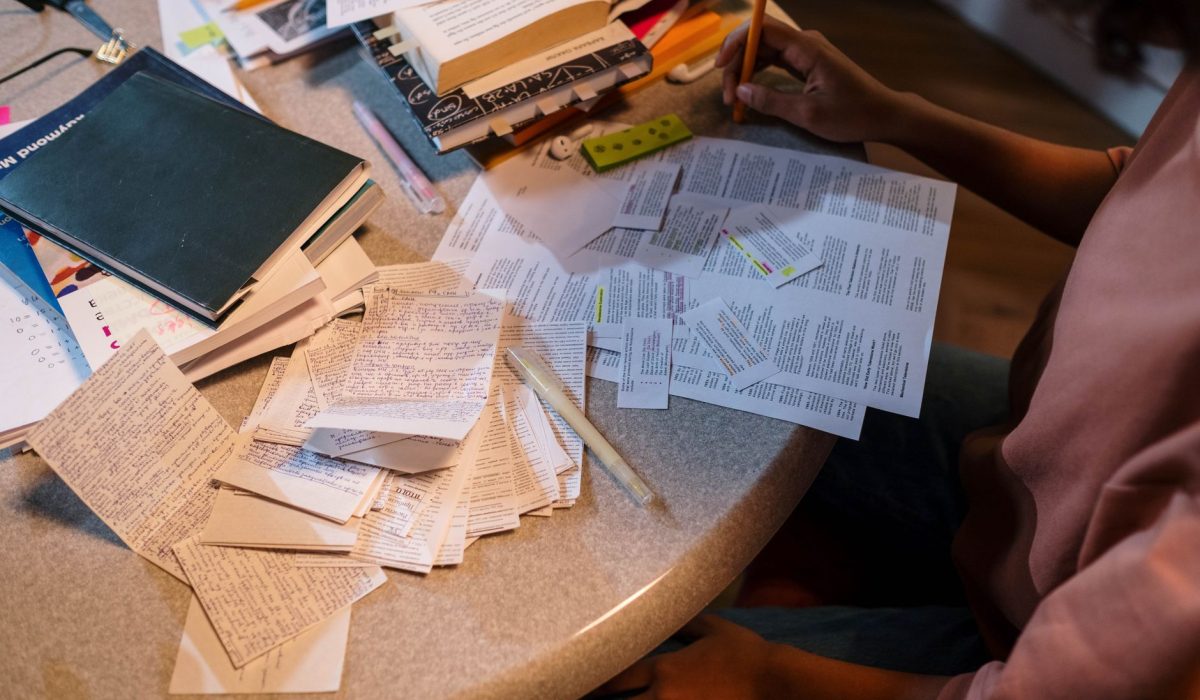
Study tips are everywhere, and most of them are wrong. Not slightly off, but actively counterproductive in ways that cognitive science has been documenting for decades. The biggest misconception is that if a technique feels productive, it probably is. Re-reading your notes feels like studying. Highlighting a textbook feels like engagement. Neither one produces the kind of durable memory that shows up when you actually need it.
Hermann Ebbinghaus mapped this problem back in 1885. His forgetting curve showed that without reinforcement, we lose roughly 70% of new information within 24 hours. What matters isn’t how long you study, but whether you’re fighting that curve intelligently or just generating the feeling of effort.
This piece covers what the research says works, with specific numbers and timelines so you can actually apply it rather than nod along and do nothing different.
Why Highlighting Fails
In 2013, psychologist John Dunlosky and colleagues published a meta-analysis rating ten common study techniques across 119 papers. Highlighting ranked dead last. Re-reading came second-to-last. These aren’t fringe findings; they’ve been replicated enough times that the result is about as settled as educational psychology gets.
Both techniques fail because of something called the fluency illusion. When you re-read a passage you’ve already seen, recognition kicks in, your brain signals “got it,” and you move on. But recognition isn’t recall. You’re not practising retrieval; you’re just confirming that the page still says what it said before. Highlighting compounds this by giving you something to do with your hands while your brain coasts.
The Cornell Note Method, developed at Cornell University in the 1950s, tried to address this. The format divides your page into a narrow left column for cue questions and a wide right column for notes, with a summary strip at the bottom. The key move is covering the right column and testing yourself on the cues. Most students use the format but skip that step, which turns it back into passive re-reading with better aesthetics.
Spaced Repetition and Recall
Active recall means closing the book and forcing your brain to produce the answer rather than recognise it. In Dunlosky’s meta-analysis, practice testing outperformed re-reading by roughly 50% on long-term retention measures. That gap holds across subject areas, age groups and test formats, which is unusual in psychology research.
Active recall is most powerful when it’s spaced. The intervals that Ebbinghaus’s work eventually led to are roughly 1, 7, 16 and 35 days after first exposure. Each review resets and extends the curve. Apps like Anki automate this for flashcard-based material and adjust intervals based on how well you actually answered, not just how confident you felt.
The practical upside is that spaced practice takes less total time than cramming. You’re not sitting with a textbook for six hours the night before; you’re doing 20 minutes four times over a month. From what I’ve seen working with students, the resistance to this approach is almost entirely emotional. It feels like you’re not doing enough, because you’re not exhausted at the end of a session.
Sleep and Study Timing
Sleep isn’t downtime for memory. It’s the consolidation phase. During REM cycles, which run in roughly 90-minute blocks, the brain replays and strengthens recently acquired information. Miss sleep the night after learning something and you lose a consolidation window that doesn’t come back just by sleeping well later.
Studying in the evening and sleeping within a few hours is legitimately better than studying in the morning for long-term retention. Not by a dramatic margin, but consistently enough to be worth accounting for. What you don’t want to do is study right up until the moment you sleep. Give yourself 20 to 30 minutes of wind-down so you’re entering sleep relaxed rather than still mentally running through equations.
For session length, the Pomodoro Technique uses 25-minute focused blocks followed by a 5-minute break. There’s nothing magical about 25 minutes specifically, but the principle is solid. Attention degrades after about 20 to 30 minutes on a single task, and pushing through that degradation doesn’t produce proportionally better learning.
Building a Realistic Schedule
A realistic Study Tips schedule has three features: it accounts for the forgetting curve by spacing reviews, it uses short sessions rather than long blocks, and it’s written somewhere you’ll actually see it. That last part sounds trivial. Vague intentions to “review this week” produce vague results.
Start by listing everything you need to retain, then work backwards from your deadline. Slot first exposures at least 35 days out if you can manage it, which for most coursework means starting earlier than feels necessary. Each item gets four review slots. If 35 days isn’t possible, compress the intervals proportionally rather than cutting the number of reviews.
I’m genuinely uncertain how well these intervals hold for procedural skills like maths or programming versus declarative knowledge like history dates. My instinct is that procedural skills need more frequent practice and benefit less from the longer gaps. But the research there is thinner, so treat the 1-7-16-35 framework as a starting point and adjust based on what actually sticks for you.
What to Change This Week
Study tips only earn their keep if they change behaviour. Stop highlighting. Replace one re-reading session with a blank-page recall test where you write down everything you remember without looking. Schedule your next review for seven days from today, not whenever you feel like it. Sleep after you study. These are small shifts, grounded in about 140 years of memory research, and they compound quickly.
The frustrating thing about evidence-based study tips is that the effective techniques feel harder. That friction is actually the point; your brain is working, not just recognising. If it feels comfortable, question it.
FAQs
What are the most effective study techniques?
Practice testing and spaced repetition ranked highest in Dunlosky’s 2013 meta-analysis, outperforming highlighting, re-reading and summarisation across multiple studies.
How long should a study session be?
25 to 30 minutes per focused block, then a short break. Attention drops noticeably after that window, and pushing through rarely improves retention.
Does studying before sleep help memory?
Yes. Sleep consolidates learning during REM cycles, so studying in the evening and sleeping within a few hours gives that material a meaningful retention advantage.